Tuesday, September 2, 2014

Rugby: All Blacks on a hiding to nothing

5:00 AM Sunday Aug 31, 2014
A big Bledisloe Cup victory over Australia would satisfy most countries but not the New Zealand camp, writes Gregor Paul.
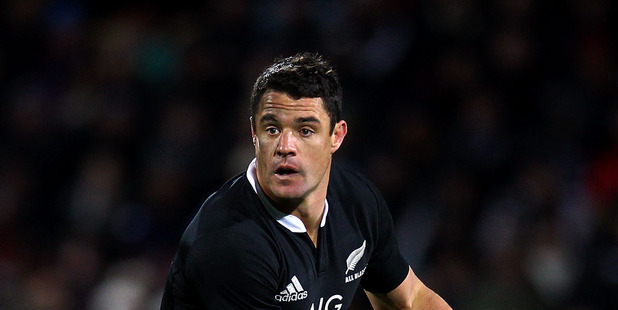
All Black Daniel Carter. Photo / Getty Images
It was Andrew Mehrtens who rightly observed that the All Blacks aren't going to win any medals for their ability to wear their hearts on their sleeves.
They tank Australia by 50 points and the mood barely lifts above sombre. They produce 60 minutes of shock-and-awe rugby and the players grudgingly admit their performance at Eden Park might have been a step up on what they produced in Sydney.
Humility and perspective are big parts of the All Black culture but the muted reaction last week was surely taking that a little too far.
Was it even a little contrived? The answer to that is, no, not at all. The All Blacks were happy with much but not all of their performance. They were satisfied rather than elated.
They were content, but not fulfilled. The sense of lingering disappointment they portrayed was a direct result of the squad and coaching staff all knowing they can do better.
That refusal to endorse the performance was driven by a genuine gripe that, as good as they were, that as well as they played for long periods, they have more to give.
Forget all that nonsense about this All Blacks side being near their peak. There's a cache of evidence that says they haven't pushed that far beyond base camp.
Daniel Carter to return
Aaron Cruden is a super player. Beauden Barrett is nearly as good. But neither has the all-round game of Daniel Carter.
Those outside the All Blacks camp rightly question whether Carter still has the pace, agility and hunger to be the player he was.
Those inside,who have played with him for years, know what Carter still is. They know he's comeback from his sabbatical in pristine condition.
His speed testing showed he's still got it- he's as fast as he was five years ago-and he's stronger, fitter and his desire to succeed, if anything, is more intense.
But it's his awareness and understanding of the game the All Blacks are trying to play that sets him apart. Under pressure, he doesn't flap.
He knows how to steer this team around better than anyone and his tool bag bulges more than both Cruden's and Barrett's. When he returns, the All Blacks will rise to another level.
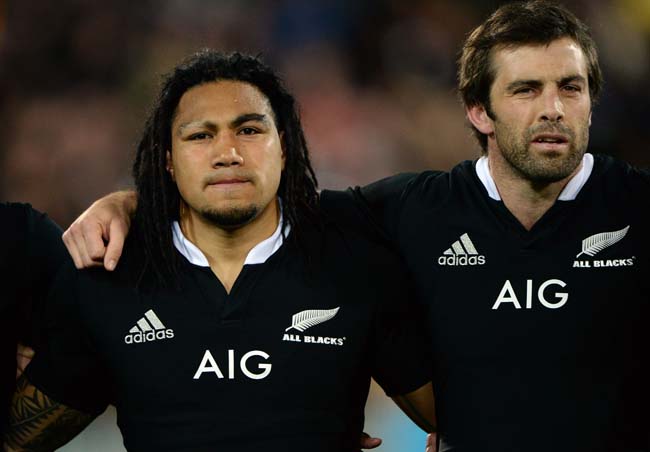
Ma'a Nonu and Conrad Smith.
Nonu and Smith
The old faithful have been united only twice this year and, for the bulk of one of those tests, Smith had a broken thumb.
These two are still far and away the best midfield combination in the country, probably the world.
Get them back in tandem and the backline offering becomes that much more potent.
There are key moments that matter in every game and these two combine so effortlessly and effectively that often they ensure the All Blacks score when perhaps other midfield pairings would fall short.
Discipline
In 160 minutes of Rugby Championship action, the All Blacks have had 15 men on the field for only 125. That's a problem on multiple levels.
There's the obvious pressure of having to play with only 14 men and the fatigue that builds.
Effectively, for 35 minutes in the last two tests, the All Blacks have had to adopt the mindset of reducing risks and making it their goal to not give away any points.
But the four cards allude to a wider problem. The All Blacks were penalized 27 times across the two tests. That compares with Australia's 22 and South Africa and Argentina's 19.
The All Blacks scored nearly twice as many points in the series, yet they were penalized five more times than the Wallabies.
If they tidy up their act and reduce the penalties, their ability to build more pressure and capitalize on opportunities will be significant.
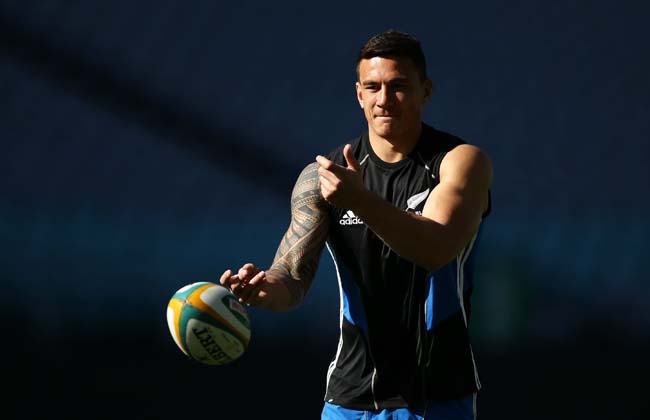
Sonny Bill Williams.
Sonny Bill Williams
It's almost certain Sonny Bill Williams will be with the All Blacks on their end-of-year tour.
The man is a weapon. He can be used off the bench or from the start. He can bust holes and create holes.
He can offload out of nothing, make huge tackles and be a fulcrum around which the All Blacks launch strike runners.
What Williams will do is increase the number of attacking options available.
The bench
This habit of drifting out of the final quarter can be partly attributed to the All Blacks bench so far not delivering as much as it should.
There are notable exceptions - Beauden Barrett, Malakai Fekitoa and, in Auckland, Steven Luatua. But the front-row that came off the bench in both tests didn't collectively pull their weight.
Their contribution was limited and it took a lot of the sting out of the All Blacks' performance.
Ben Franks, for example, played 58 minutes, carried the ball three times for zero metres and, while he made 15 tackles, also gave away three penalties.
Keven Mealamu's lineout success is 71 per cent. Dane Coles is operating at 94 per cent.
The lineout is a critical platform for the All Blacks but they haven't been able to attack off it particularly well when Mealamu has been on for his 43 minutes.
The All Blacks know they need every fresh pair of legs that comes on to make a noticeable difference.
The unwanted lull
The All Blacks are striving to deliver the mythical perfect performance. No one is entirely sure quite what that would look like but it would certainly not entail periods of low-accuracy, low-intensity rugby as has been the case in each test this year.
Look at the All Blacks' three best games this year-the second and third tests against England and last week's demolition of the Wallabies.
They had periods when they drifted out of the game.
In Dunedin, they spent 40 minutes faffing about before they found their rhythm, scored three tries and then faffed about again for the last 10 minutes.
In Hamilton, they were electric for 50 minutes, average for 30.
And at Eden Park, they had Australia in awful trouble at 44-6 with 20 minutes to go . . . but didn't find the jugular.
If they had maintained their composure, accuracy and patience last week, it could have been 64-6. "There were parts of that game that were not great," coach Steve Hansen said. "We let in some soft tries and dropped a lot of balls."
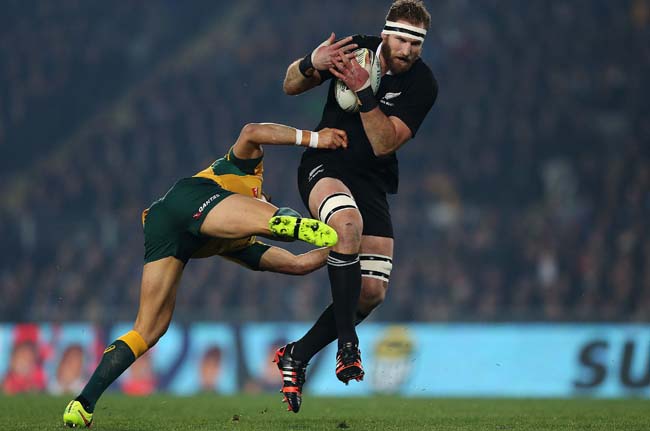
Kieran Reid.
Kieran Reid
The world's best player has had a horribly-disrupted season due to concussion. He not only lost conditioning during his lay-off, but also confidence.
He's only now starting to look his old self. The All Blacks have had Read at about 75 per cent so far.
He's made 23 tackles-the third-highest in the competition -and won six lineouts.
Where the All Blacks expect he'll feature more is in his ball carrying and offloading. He's carried 13 times, a long way down on South African No 8 Duane Vermeulen, who has been on the ball 21 times.
He's offloaded only twice. Not only is that number likely to rise, the effectiveness of his timing will make the difference.
Read's trump card is sucking defenders to him out wide to flip the ball to the last man. With fitness restored and confidence climbing, that will become a feature in the next few tests.

Saturday, August 23, 2014

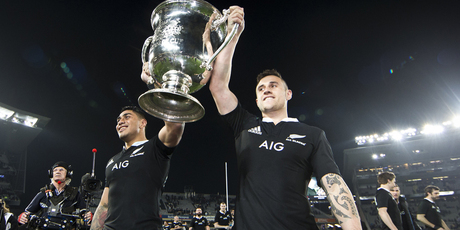
All Blacks thrash Wallabies to retain Bledisloe


Gregor Paul

Gregor Paul is the Herald on Sunday's rugby writer

Thank goodness for that. A bit of order was restored and, with it, a little relief that all may not be so bad in the world of rugby - in the world of New Zealand rugby.
As emphatic performances go, tonight would be hard to top. The tight five can rest assured they made amends for last week. They pretty much took a stick of dynamite and obliterated the Wallaby pack.
There were a couple of scrums - albeit when the visitors had a man in the bin - that could only described as annihilation.
The All Blacks scored two tries from driving mauls and owned the collisions to the extent they could endlessly churn the fast ball they crave. They looked like a team with more to come, with the collective power to crush anything in their midst.
There really isn't any getting away from the same old, same old truth about test football - win the physical exchanges, win the game.
The Wallabies got a sobering reminder of that and, if they thought they had closed the gap, they might now have to re-think that. They have got some lovely backs. But they also have some lovely forwards. They aren't quite ready yet for big-boy rugby. Close. But not yet
This theory of All Black capitulation around the next corner will have to be reconsidered, too. It's probably not. What happened in Sydney was that they played really badly and drew.

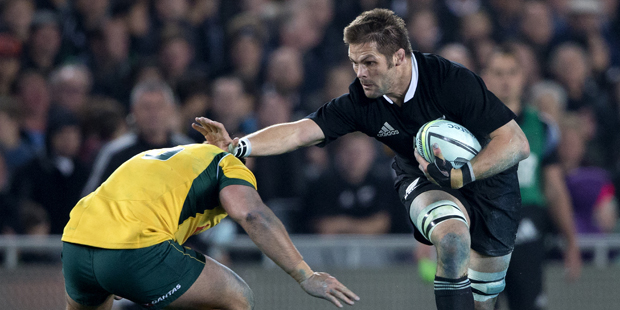
Richie McCaw in action against Australia. Photo / Brett Phibbs
What happened tonight was that the All Blacks played much better and they won. Complicated ideas can be packaged around that to explain it in more detail but there's really no point. Things to take note of - the tight five were excellent compared with virtually non-existent. The loose trio were everywhere instead of nowhere. The midfield made clear and effective decisions, the back three ran off each other and got involved and then there were the Aarons.
Smith was sharp and lively. He kicked well, ran well and passed well. It was Cruden, though, who found the biggest upside on his Sydney performance. He was back somewhere near his impish best.
A dry ball, a fast track, a dominant tight five - it was his kind of game. Still, he had to pull the strings and give the All Blacks the flow and connectivity they needed.
He did that mostly through his running game. The Wallabies rushed him, came for him and snatched at nothing. Cruden at his best is pretty much rugby hip-hop - a bit of dance, skip and hop.


He showed his value in the buildup to Julian Savea's first try when he looped round to collect a spilled ball, then took off. He dummied, kept running and then threw a brilliant pass.
Only 10 seconds earlier the Wallabies had been threatening to score after a superb run by Israel Folau. Instead, they were traipsing back under the posts, the game almost out of reach.
It was definitely put out of reach by 55 minutes after Richie McCaw touched down for his second.
The All Blacks will be annoyed they didn't find fifth gear in the final quarter and instead slipped back into third. The Wallabies deserve a bit of credit for that - they had been well down on their performance.
Too many dropped passes under pressure had been the killer for them. That and, of course, the inability of their tight five to get anywhere near being competitive.
New Zealand 51 (R. McCaw 2, penalty try, J. Savea, K. Read, S. Luatua tries; A. Cruden 5 cons, 3 pens; A. Smith con) Australia 20 (I. Folau, M. Hooper tries; K. Beale 2 cons, 2 pens). Halftime: 23-6.
OPTA MATCH STATS

Match Stats — Team Stats

New Zealandv.Australia
  • Tries
    675%25%2
    Metres
    55159.9%40.1%369
    Carries
    11854.1%45.9%100
    Defenders beaten
    1970.4%29.6%8
    Clean Breaks
    981.8%18.2%2
    Passes
    17558.7%41.3%123
    Offloads
    1760.7%39.3%11
    Turnovers conceded
    1140.7%59.3%16

Sunday, July 6, 2014

All Blacks give England a lesson in set-piece attack (part 2)


Default
SET-PIECE ATTACK offers teams a wonderful chance to create try-scoring chances, given that the side in possession can pre-plan their moves and exploit the space created by the forwards being restricted to one small area of the pitch.
Julian Savea’s disallowed try
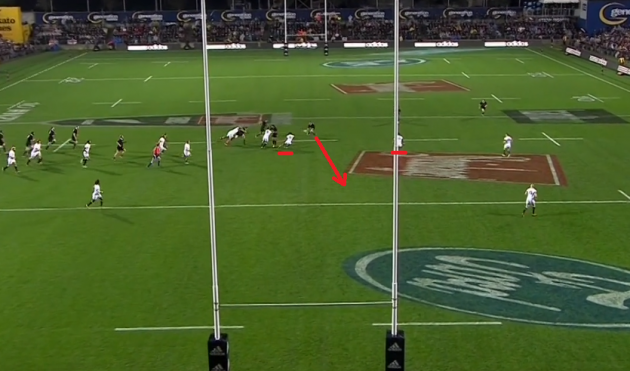
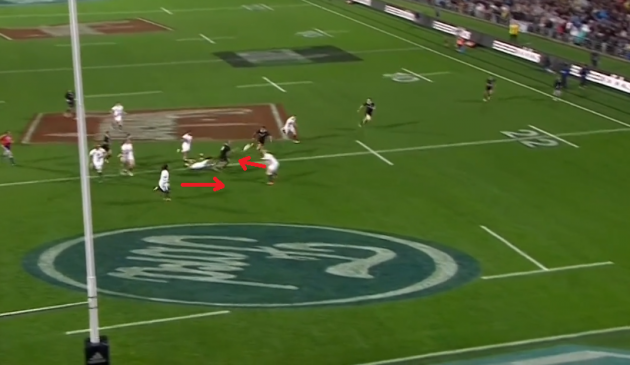
Perhaps the best of New Zealand’s three excellent line-outs attacks in the opening 15 minutes against England was the one that ended without a try. Hansen’s charges used the same move they attempted for Savea’s first score, but pulled it off successfully this time.
Like earlier in the game, the passage starts with a good line-out maul from the Kiwis, driving forward five metres before the ball is released. It’s worth noting that the maul is still making progress when McCaw pops the ball off to scrum-half Smith; front foot ball for the backs and a nightmare to defend for England.
Similarly to the two tries we have already looked at, there are major spacing issues for the England midfield defence in this passage. Out-half Burns is drawn close to the maul as Jane comes off his wing to offer himself as a carrier off Smith. As a result, Eastmond is drawn in tighter to line up opposite Cruden. But as we have seen in the video above, the Kiwi out-half runs that now familiar line out the back of Nonu and into the space between England’s centres.
Throughout all of these examples, Tuilagi has been lining up directly opposite New Zealand’s outside centre Fekitoa. Many midfield defences will start ‘tight’ to the set-piece and then use a slight drift in getting across the pitch as the opposition move the ball wider. However, England defence coach Andy Farrell prefers his defenders to line up ‘square’ to attackers, advancing straight up the pitch to tackle them, rather than ‘showing’ them the outside shoulder.
The Kiwis are aware of this, and took full advantage with these line-out attacks.
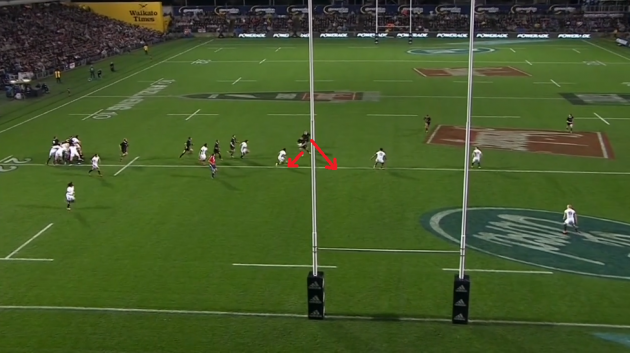
As we see above, Eastmond is now in the position where he has to stick on Nonu running a direct line back against the grain, even with Cruden drifting behind him. If Eastmond slides past Nonu onto Cruden too early, the Kiwi 12 will make a clean bust of the English line. Nonu makes an excellent pass to Cruden off his left shoulder, as Tuilagi realises that he is going to have to adjust and deal with the out-half. However, with Chris Ashton also up flat in the line, the pair of England defenders are now in no man’s land.
Cruden has the vision and handling skill to loft a basketball pass over Ashton’s head to Ben Smith, who is suddenly in space with Savea outside him. Again, Brown is the last defender for England, utterly stranded. It’s a real shame that Smith could not finish the move off by providing Savea with a pass that was not forward, but the entire attack from the Kiwis remains superb.
England struggled against New Zealand’s line-out attack inside the opening 15 minutes on Saturday, ultimately giving the home side a lead they couldn’t recover from.

All Blacks give England a lesson in set-piece attack (part 1)


Default
SET-PIECE ATTACK offers teams a wonderful chance to create try-scoring chances, given that the side in possession can pre-plan their moves and exploit the space created by the forwards being restricted to one small area of the pitch.
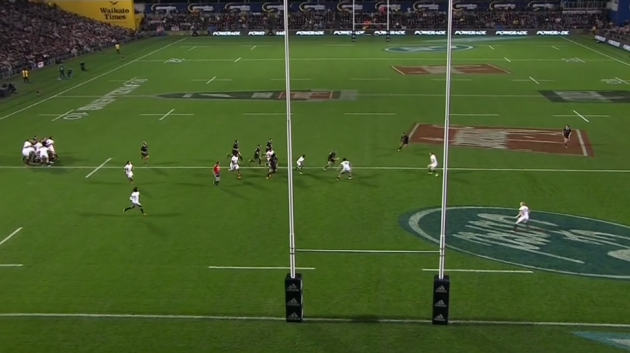
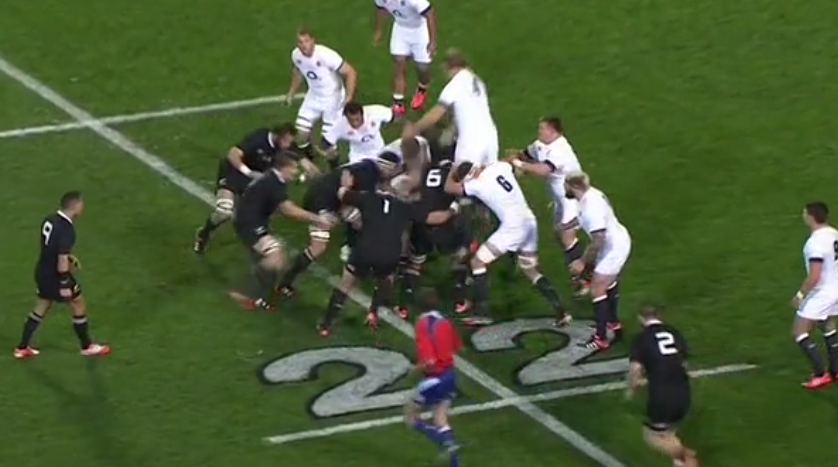
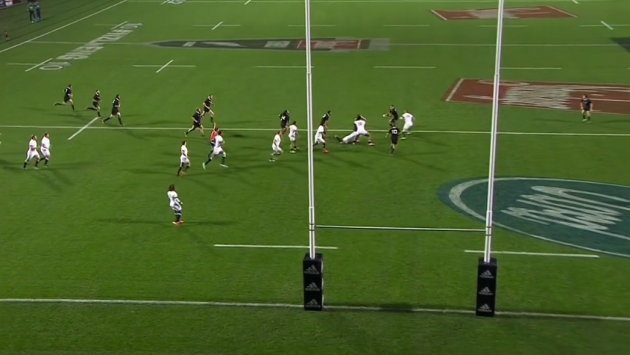
New Zealand gave an excellent demonstration of exactly that in their 36-13 victory over England last weekend, blitzing Stuart Lancaster’s side with three line-out attacks in the opening 15 minutes of the encounter, two of which led to tries. While the third effort didn’t result in a further five points, the Kiwis’ superb start to the Test match dampened any early English optimism, while also providing them with a 12-point cushion on the scoreboard with less than a quarter of the game elapsed.While this wasn’t the cleanest of tries from New Zealand, there were many elements of high quality that went into constructing the score. The line-out actually stemmed from an England error [Mike Brown kicking directly into touch after bringing the ball back into his own 22], a somewhat symbolic incident in the second minute of play. Kiwi hooker Dane Coles hits Brodie Retallick towards the front of the line-out, and with England competing in the air through Joe Launchbury, it provides the attacking team’s pack with an ideal chance to get their maul moving forward.
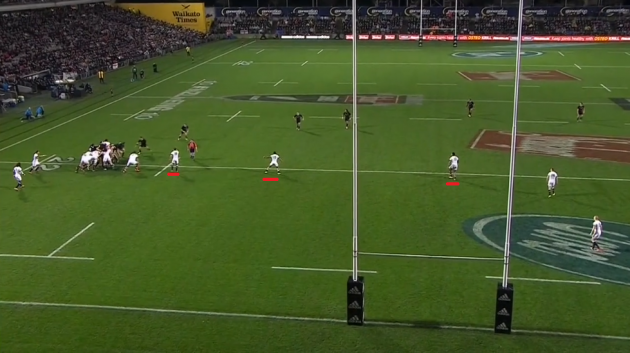
In the image above, we see New Zealand beginning to launch the maul into the space opened by England’s decision to compete for the line-out throw. With scrum-half Aaron Smith screaming “maul, drive it,” the forwards do exactly that. It’s by no means the most impressive driven maul of all time, but New Zealand manage to eke out a few crucial metres and get the attack onto the front foot. From there, the backs take over, starting with Smith’s stunning pass.
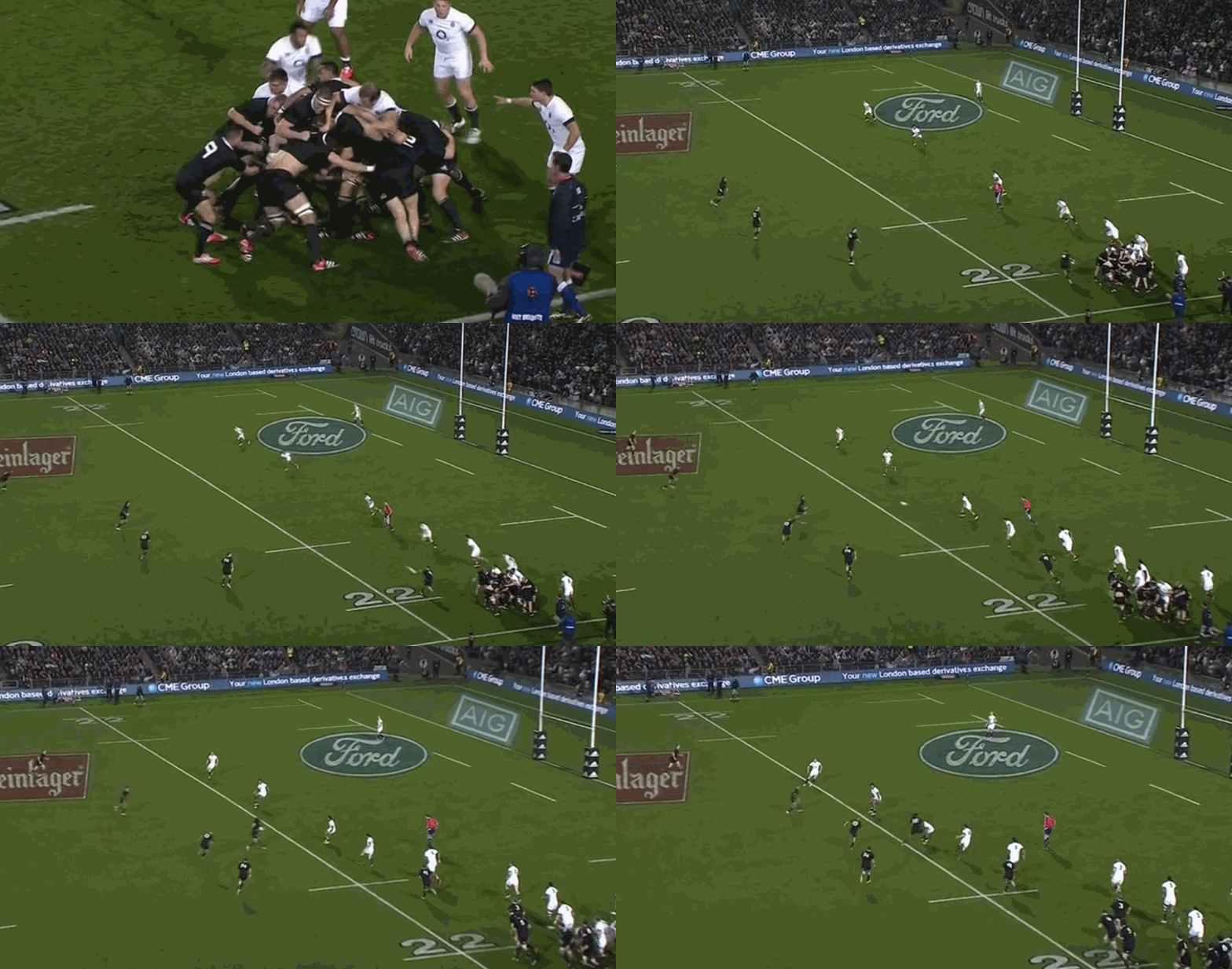
It’s a remarkable piece of skill from the Highlanders half-back, a laser beam of a pass over a distance of approximately 20 metres and with an incredibly low trajectory. Smith’s rocket means the Kiwis are suddenly in midfield and running at the English defence. The length of the pass also cuts out any possibility of Billy Vunipola or Freddie Burns [who start close into the maul] getting across the pitch to first receiver Ma’a Nonu. As we see below, that forces inside centre Kyle Eastmond to commit to his opposite number.
In turn, that means Eastmond can’t drift out onto Aaron Cruden, who has taken a line behind Nonu and is available to run into the space between the England centres. While the pre-contact pass from Nonu doesn’t arrive to free Cruden to run into that gap, Eastmond is passive with his tackle attempt, allowing Nonu to release the ball even after being engaged in contact. Being aware of the bad situation England are in defensively, Eastmond could have unleashed himself into the hit on Nonu, attempting to snuff out the danger before it could develop any further. Unfortunately for Lancaster’s side, that hit does not transpire and Nonu is free to offload messily, before Cory Jane sweeps up the ball and feeds Smith, who has worked hard to follow play.
At this stage, Chris Ashton and Manu Tuilagi have come infield in an attempt to shut down the play or even regather possession for England, but the end result is a congestion of defenders in one tight area of space on the pitch. Smith’s wonderful pirouette out of the challenge of Ashton is followed instantly by another remarkable pass, this time one-handed. Such a pass likely makes up part of the scrum-half’s training regime, and he can rely on the skill under pressure as a result. Mike Brown is left utterly stranded as England’s last defender and with a 2-on-1 scenario, Ben Smith and Julian Savea are never going to be stopped
Julian Savea’s second try
Just over four minutes after Savea dotted down his first try from New Zealand’s opening line-out attack of the game, the Kiwis created another score from the same source and finished by the same man. While the opportunity for New Zealand to launch that first score came about as from an error by Mike Brown, the second try stemmed from a superb restart by Aaron Cruden.
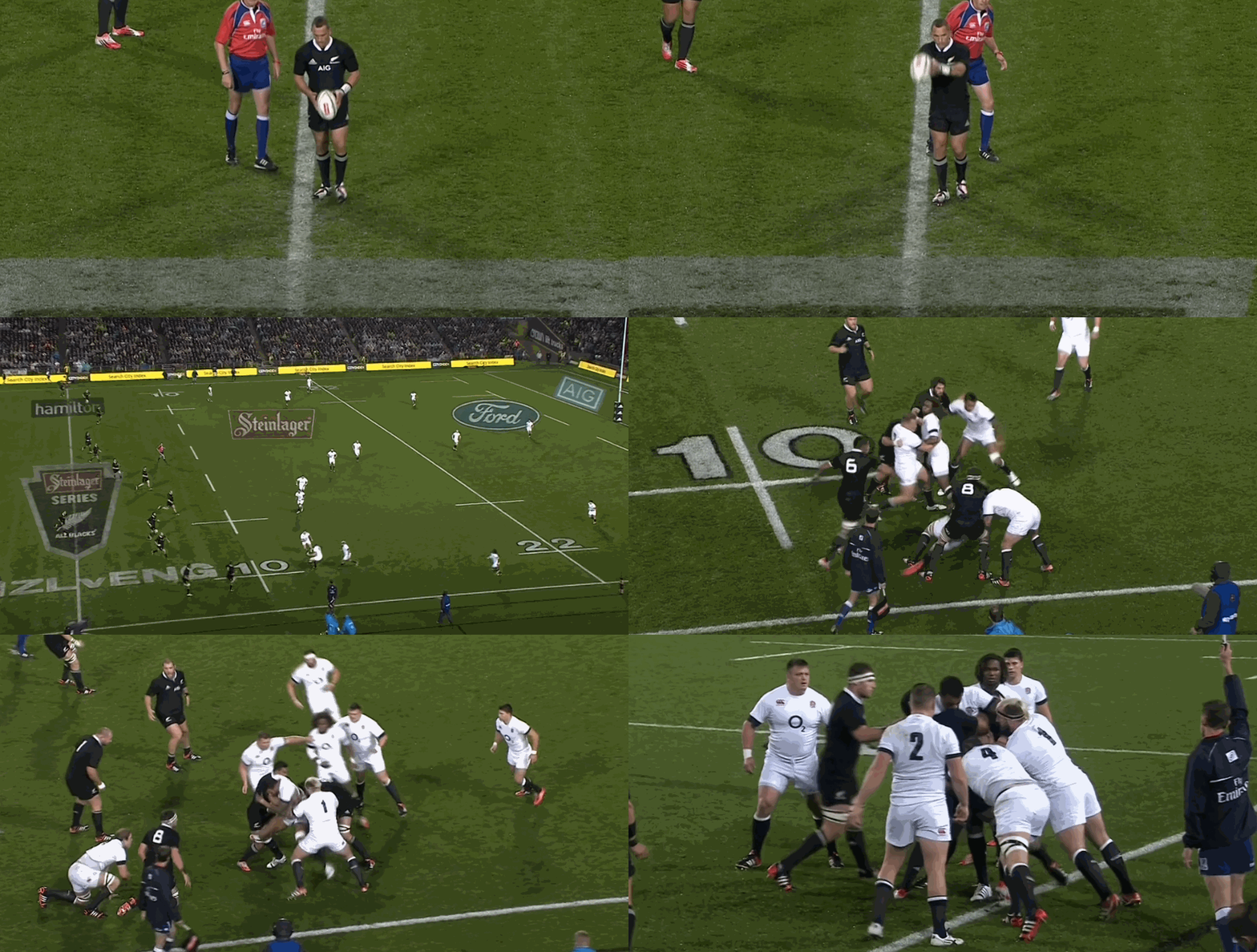
Having conceded a penalty to England, Steve Hansen’s men were intent on getting the ball back as swiftly as possible. Fortunately for them, Cruden’s restarts short to the right are among the best in the world. Kieran Read chases well and forces the ball loose as he competes with Joe Launchbury, before his teammates swarm in on Courtney Lawes to force the Northampton lock into touch. From the moment the assistant referee signals for a line-out to when Dane Coles throws the ball in, just 13 seconds elapse. The Kiwis are focused on getting the ball back into play as quickly as possible, striking at England as the visitors organise themselves.
The ball boy is still on the pitch as Coles throws to Read, while Richie McCaw is already moving away from his starting ‘half-back’ position behind the line-out. Simultaneously, Aaron Smith moves from the front of the line-out formation into the hole vacated by McCaw.
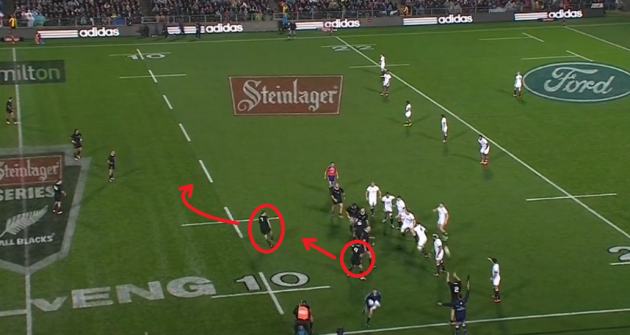
What it all means is that New Zealand suddenly have an extra man in their backline attack as McCaw takes on the role of first receiver. Dylan Hartley does look to track the openside from a similar starting position behind England’s line-out, but he’s already three steps behind. Ben Youngs, meanwhile, is in his usual defensive position, marking the blindside channel in case New Zealand look to attack back down that space [which they did later in the half with major success]. With the ball in McCaw’s hands, Ma’a Nonu arrives on a flat line, straightening the Kiwi attack and forcing Kyle Eastmond to make another demanding defensive decision.
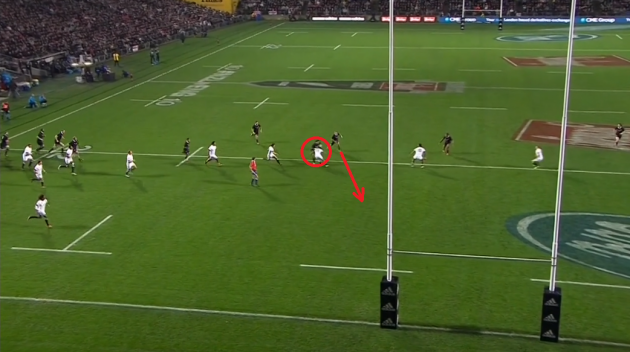
The presence of right wing Cory Jane [circled above] in behind McCaw adds another stress for Eastmond, providing another potential target for the openside’s pass and another reason for the Bath centre to stay tight to Freddie Burns. That’s exactly that Eastmond does, initially lining Nonu up despite Burns having the Kiwi 12 covered. When the image is frozen, it is of course easy to pick these things out but in live play, the amount of movement from New Zealand [Cruden is drifting wide behind Nonu too] makes it a hugely demanding decision.
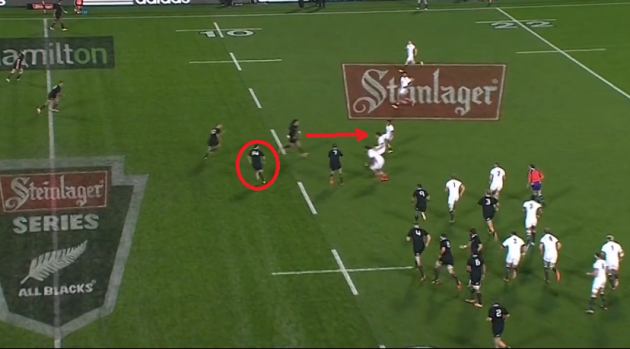
McCaw releases the pass behind Nonu to Cruden, and as we see below, the decoy running of Nonu and Jane has been enough to draw Eastmond in, leaving the space on his outside shoulder for Cruden to run into.
It’s worth noting the space between Eastmond and Manu Tuilagi in the instance above, which echoed a major problem for the pair in the first half before the Bath man was withdrawn.
While Eastmond’s decision to initially bite in exaggerates the spacing here, it was an issue for the entire 40 minutes when England had to defend. We don’t know if Eastmond was getting any communication from Burns inside him, reassuring him that there was no need to bite in, but we repeatedly saw this hole open up in between Eastmond and Tuilagi.
Bath coach Mike Ford has suggested that Eastmond was not individually responsible for the first half defensive errors and, while he is obviously slightly biased, there is certainly truth in that assertion. Inside centre is a difficult position to defend on line-out attack, with New Zealand’s brilliant movement taking full advantage of that. Returning to the play at hand, Cruden makes the scything break and eventually forces Mike Brown to bite in on him, with Marland Yarde struggling to get across and allow the fullback to drift out onto the attackers wider out.
As pointed out by the New Zealand-based commentary team, Cruden has the option of hitting Malakai Fekitoa short off his left shoulder as Brown bites in, but opts to go for the long pass to Savea out wide. While the pass is not as accurate as Cruden would have intended, the sensational pick up and finish by ‘The Bus’ compensates and sees a wonderful line-out attack end with five deserved points.

Monday, June 16, 2014

AllBlack's safe hands click to give 2-0series win


Getty Images
JAMES MORTIMER     14 JUN 2014     GETTY IMAGES
Head coach Steve Hansen had called for improvement, as had captain Richie McCaw, who led the tackle count for his team with 12, a performance notably free of errors which allowed the hosts to generate the continuity needed to spark their attacking game.

In comparison to the first Test, the number one ranked team in world rugby saw their passes stick, and they looked to up the ante against what was a full strength England team.

The safety of the All Blacks hands saw the phases build up, which saw them dominate long periods with possession and territory, while individual players were superb.

Ben Smith put in a home town performance to be proud of with an incisive effort – 20 carries for 130 metres gained – while Julian Savea provided the predicted punch while the New Zealand forwards were more direct that last weekend.

Unveiling Kapo O Pango, the World Champions looked fired up, even though England would get the early advantages with double penalties.

The second would lead to Owen Farrell, one of five changes to the England starting XV, knocking over the first points after three minutes.

The All Blacks, on defence early, would concede enough penalties to earn McCaw a word that further infringements would lead to cards.

Marland Yarde would cross the first five points with the English midfield profiting from their first prolonged period with possession, and a Farrell conversion would make it 10-0 with 11 minutes played.

A penalty to Cruden would give the All Blacks their first points, but a miss in the 18th minute would allow England to take early control of the match.

New Zealand would play their promised ball in hand game to great effect, but England’s defence would hold firm, even though the match looked to be played at a higher pace.

A penalty to Cruden in the final stages of the first half would make it a 10-6 game to the English.

But the second half would be a different affair, with Ben Smith scoring in the 44th minute, Savea would give him the final pass after an initial Aaron Cruden break.

It would give the All Blacks the lead which they would not relinquish.

Julian Savea would score after another piece of brilliance from Ben Smith, while Aaron Smith made another defining break as the hosts began to find stretch their legs.

The All Blacks would dominate possession and territory by over 60 percent for the match, largely due to their efforts in the final 40 minutes.

The biggest difference was that the hosts passing was going from hand to hand, with great skills on display as the World Champions forwards also began to warm to their efforts.

England wouldn’t lie down, even though they lost Farrell to a yellow card as the game entered its final quarter.

Ma'a Nonu would crash over with another textbook effort from the back division, but England would finish with a flourish.

Mike Brown would score a try despite numerous replays from the TMO, while Chris Ashton would score on the death to give the English coaching staff a strong finish to work on.

But in front of a capacity crowd in Dunedin the All Blacks would secure the Steinlager Series 2-0 after the second of three Tests.

All Blacks 28

Tries: Smith (43), Savea (49), Nonu (62)
Pens: Cruden (11, 40), Barrett (59)
Cons: Cruden (44), Barrett (65)

England 27

Try: Yarde (7), Brown (71), Ashton (80)
Pen: Farrell (3, 47) 
Con: Farrell (8, 71, 81)

Stuff.co.nz - All Blacks